How to Take a Payday loans UK It was working last week

16days


Militarism and  Sexual Violence Against Women in Africa:  “From Peace in the Home to Peace in the World:Let’s Challenge Militarism and End Violence Against Women!”

Welcome to MEWC’s Series on Militarism and Sexual Violence Against Women in Africa!

Make Every Woman Count would like you to join its efforts to contribute to the global campaign to end gender violence.This year, we have decided to pick 16 African countries and write short articles highlighting their country-specific issues around Violence against Women and Gender-Based Violence on our website on this year’s theme: “From Peace in the Home to Peace in the World: Let’s Challenge Militarism and End Violence Against Women!”.

  Dim lights

This series is in conjunction with the international campaign: 16 Days of Activism Against Gender Violence that symbolically runs from 25 November, International Day Against Violence Against Women to 10 December, International Human Rights Day, in order to underline that violence against women is a violation of their human rights.

 Throughout the 16 days Make Every Woman Count will be featuring articles exploring this year’s theme: “From Peace in the Home to Peace in the World: Let’s Challenge Militarism and End Violence Against Women!”

The goal will be to run an article discussing one or more of these themes from 16 African countries each day of the campaign from 25 November to 10 December.

Africa has a long history of militarism beginning with the birth of many of Africa’s nations. Shortly after independence, in most cases as a result of violent struggle, African states were entangled in Cold War politics, the arms race and proxy wars. Coup d’etats, civil conflicts and military governments became the rule and not the exception.

“By the mid-1970s more than half of Africa was under military rule, and between 1990 and 2005, no fewer than 23 nations were involved in conflict, with an average cost per year of US $18 billion to African economies,” write Amina Mama and Margo Okazawa-Rey in their editorial Militarism, Conflict and Women’s Activism.

Today, violent conflicts, largely intrastate, cost the region and estimated US $3 billion per year and military spending.  And arms continue to flood into the continent as Cold War politics have been replaced by those of the War on Terror declared by the United States in 2001.  

 Violent conflicts, the most harmful manifestations of militarism, which the campaign defines as: “an ideology that creates a culture of fear and supports the use of violence, aggression, or military interventions for settling disputes and enforcing economic and political interests,” disproportionately impact women and children. They are killed, maimed, tortured, raped, or displaced, among other harmful affects.

During the conflicts in Uganda, Liberia, Sierra Leone, Sudan, Guinea, Rwanda and across the continent throughout the 20th century hundreds of thousands of women and girls have been victims of sexual violence and exploitation.  Between 250,000–500,000 women and girls were raped during the 1994 genocide in Rwanda. In the Democratic Republic of Congo it is estimated that more than 400,000 women have been raped during the last decade of fighting.  And of the 50 million uprooted people around the world, women and children account for 80%.

But the 16 days of activism seeks to go beyond raising awareness of violence against women during wartime.  It seeks to stop a culture of militarism that promotes a masculinity that equates strength with violence and power. Militarism, as it is, induces and perpetuates gender-based violence, against women and men in the form of domestic violence, and structural violence. Militarism shatters women’s lives, destroys their environment, and endangers their health and the health of their family.  It also undermines democracy, human rights and economic development.  It cannot be allowed to continue.

It is our hope that this series will shed light on these negative impacts of militarism and contribute to a more peaceful and secure 21st century for women in Africa.

About the 16 days of Activism:

The ‘16 Days of Activism Against Gender Violence’ is an international movement to end gender violence. Born in 1991 during the first meeting of the Women’s Global Leadership Institute, the campaign runs symbolically from 25 November, International Day Against Violence Against Women to 10 December, International Human Rights Day, in order to underline that violence against women is a violation of their human rights.

More than 3, 700 organizations in approximately 164 countries have participated in the 16 Days Campaign since 1991 and this year MEWC would like to be one of them.

Militarism remains a key source of violence for women. As an ideology that creates a culture of fear, militarism supports the use of violence, aggression, and military interventions for settling disputes and enforcing economic and political interests. The impacts of militarism run deep, with material, institutional, cultural, and psychological impacts on all of our communities. It privileges violent forms of masculinity, and presumes that violence is an effective way to solve problems. Militarism often has grave consequences for the safety and security of our society as a whole, including women, children, and men. From sexual violence in conflict to the proliferation of toy guns for children, militarism influences how we view women and men, our families, neighbors, public life, and specific countries.

The sub-themes of the Campaign this year are:

  •     Sexual and gender-based violence committed by state agents, particularly the police or military
  •     Proliferation of small arms and their role in domestic violence
  •     Sexual violence in and after conflict

  Dim lights


LIBERIA: Women with Disabilities in Post-Conflict Liberia

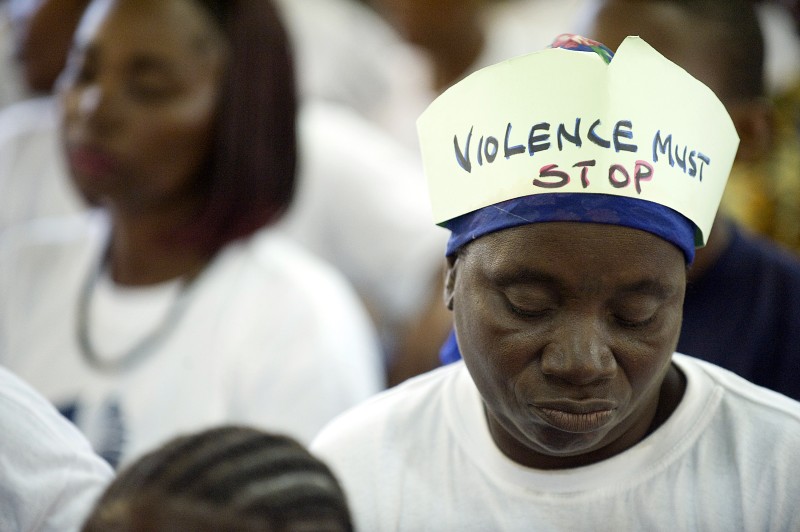
While the US Senate, faced by a politically ill-conceived Republican backlash, struggles to ratify the United Nations Convention on the Rights of Persons With Disabilities,[i] Liberia takes an important step towards addressing the hundreds of thousands of people living there with disabilities after their civil war. Not only that, the week-long seminar on women with disabilities that began last week in Liberia also coincides with the 16 days of activism against gender violence,

Read more...


MALI: The War Against Women Meets Mali’s Female Peacemakers

”We, the women of Mali, condemn abuses and the rape of women in the North… Yes to secularism. No to fundamentalism in Mali.” These were the chants of women’s groups and associations marching in Bamako in April 2012, led by the Alliance of Women for Peace.[1] Since Mali’s political crisis erupted early in 2012, the women’s movement has become entwined with the broader social and political struggle across the country for an end to the militarism

Read more...


MOZAMBIQUE: Domestic Violence Remains a Serious Issue Three Years After its Criminalization

Three years following the passing of Mozambique’s law on domestic violence, which for the first time recognized domestic violence as a crime in and of itself, as opposed to assault; cases continue to occur in the southern African country with many more going unreported. [1]

Read more...


COTE D'IVOIRE: Failed Promises After Decades of Conflict

Côte d’Ivoire endured civil war from 2002-2007, divided mainly between rebellious factions from the North and the incumbent government factions in the South. Continuing political unrest has included election-related violence, resurgent armed conflict and grave human rights abuses. Conflict in the country over the past two decades has disproportionately affected women and youth who dominate IDP populations and face discrimination and intimidation across the country

Read more...


UGANDA: Combating Human Trafficking of Women and Girls in Their Search For Better Economic Opportunities: A Growing Epidemic in the East African Nation

As Uganda kicks off the 16 Days of Activism against Gender-Based Violence campaign 2012, I feel it’s imperative to address the growing epidemic of human trafficking of girls and women, in their search for better economic opportunities, both at home and abroad. The United Nations Convention on Transnational Organized Crime defines trafficking in persons as “the recruitment, transportation, transfer, harboring, or receipt of persons, either by threat or use of abduction,

Read more...


SOMALIA: Women Fight for Their Place in the New Somalia

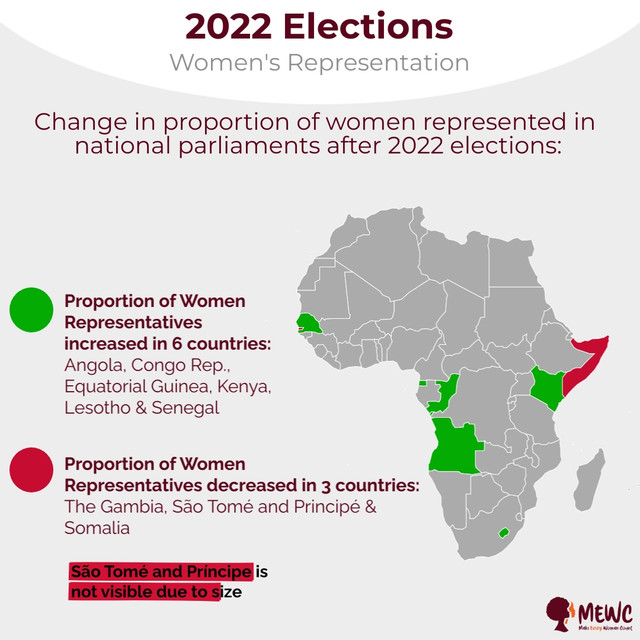
Somalia’s state has completed its institutional transition by forming a new Federal Parliamentary system, now the attentions of the new government can begin to focus upon the much needed process of transforming the governance of this notoriously fractured and unruly country. Women’s human rights have never been given serious and prolonged attention by the state and as such the challenges ahead are long, hard and numerous,

Read more...


SOMALIA: Women Fight for Their Place in the New Somalia

Somalia’s state has completed its institutional transition by forming a new Federal Parliamentary system, now the attentions of the new government can begin to focus upon the much needed process of transforming the governance of this notoriously fractured and unruly country. Women’s human rights have never been given serious and prolonged attention by the state and as such the challenges ahead are long, hard and numerous,

Read more...


KENYA: Kenya’s 16 Days of Activism Against Gender Violence Highlights the Epidemic of Interpersonal and Domestic Violence

In Kenya, stories of domestic abuse, murder, rape and other forms of sexual assault are featured in newspapers and flash across screens on a daily basis. According to the UN’s campaign “Say No: unite to end violence against women” almost 70% of Kenyan women experience violence at some point in their lifetime. [1] A 2006 report by UN AIDS found that one in four experienced violence in the previous 12 months. [2]

Read more...


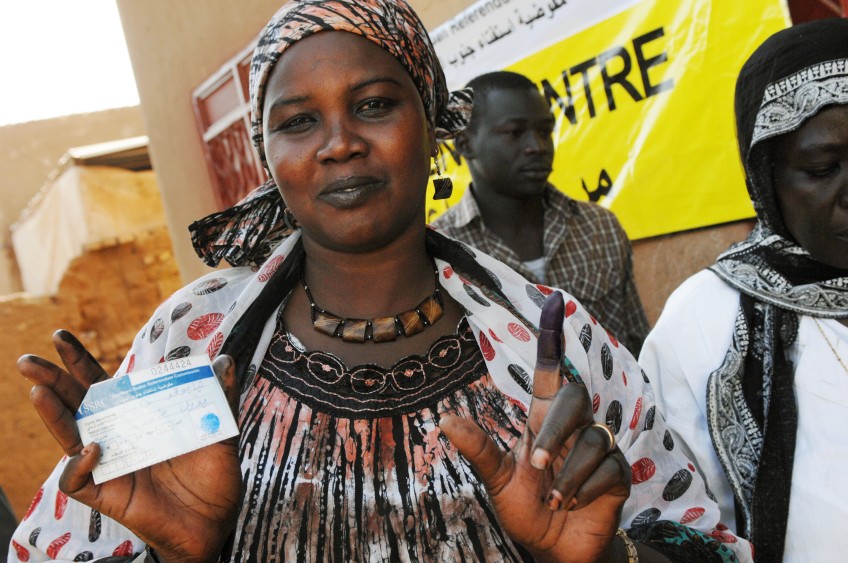
SUDAN: Laws That Condone Violence Against Women


The situation for women in Sudan is constrained due to high levels of gender-based violence and violence against women. Sudan is one of two countries (the other being Somalia) that has not ratified the Convention on the Elimination of All Forms of Discrimination of Against Women (CEDAW).

Read more...


SOUTH SUDAN: Africa’s Youngest Country Struggles to Curb Violence Against Women

South Sudan, a country that gained independence from Sudan only a little more than 1 year ago, has among the worlds worst developmental indicators. It has the highest rate of maternal mortality in the world, with 2,054 per 100,000 live births.[i] South Sudan presents an overall difficult situation for women who make up about 60% of the population.

Read more...


SOUTH AFRICA: The Numbers Say It All

“Violence against women is still at "crisis levels" throughout the region despite the range of laws on countries' books to protect the rights of women” – South African Minister Xingwana.

Read more...

 
  •  Start 
  •  Prev 
  •  Next 
  •  End 

Page 1 of 2